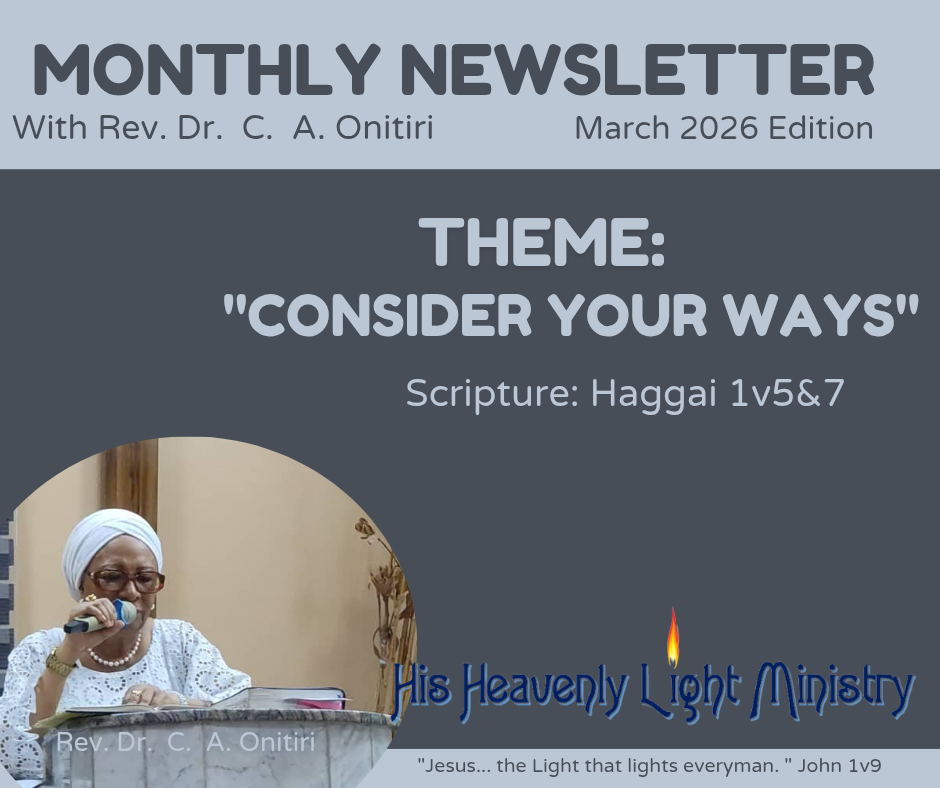
MONTHLY NEWSLETTER With Rev. Dr. C. A. Onitiri (March 2026 Edition)
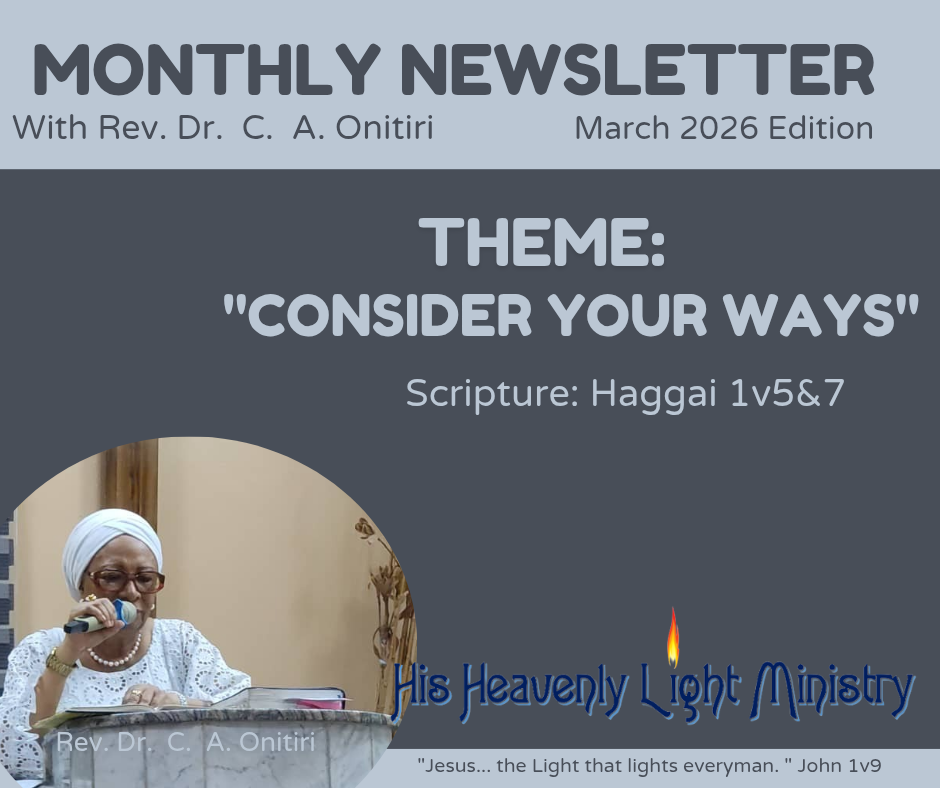
SCRIPTURE FOR THE MONTH OF MARCH: HAGGAI 1V5&7
“Now therefore thus saith the LORD of hosts; Consider your ways.” — Haggai 1:5
“Thus saith the LORD of hosts; Consider your ways.” — Haggai 1:7
THEME: “CONSIDER YOUR WAYS”
Welcome to the Month of March 2026. May the grace and peace of the Lord Jesus Christ continually reign in your lives and homes as we continue to march on this season. Our running text is taken from the book of Haggai.
SCRIPTURE EXPOSITION
The book of Book of Haggai was written during the post-exilic period when the Jews had returned from Babylonian captivity. Under the leadership of Zerubbabel and Joshua, the people had begun rebuilding the Temple in Jerusalem. However, discouragement, opposition, and personal interests caused them to abandon the work of God.
Through the prophet Haggai, God confronted the people with a powerful command: “Consider your ways.”
The Hebrew phrase implies deep reflection, careful examination, and intentional realignment. It was not merely a suggestion—it was a divine call to spiritual accountability.
THE CONTEXT
- The people were building their own houses while God’s house lay in ruins (Haggai 1:4).
- They were experiencing economic hardship (Haggai 1:6).
- Despite much effort, there was little yield.
God revealed that their struggles were connected to misplaced priorities.
WHAT DOES “CONSIDER YOUR WAYS” MEAN?
- Evaluate Your Priorities:
What occupies your time, resources, and energy? - Examine Your Spiritual Condition:
Are you growing, stagnant, or declining? - Assess Your Commitment to God’s Work:
Is God’s kingdom first or secondary? - Realign with Divine Purpose:
Reflection must lead to correction.
CROSS REFERENCES
- Matthew 6:33 – “Seek ye first the kingdom of God…”
- Lamentations 3:40 – “Let us search and try our ways…”
- 2 Corinthians 13:5 – “Examine yourselves…”
- Proverbs 4:26 – “Ponder the path of thy feet…”
- Luke 15:17 – The prodigal son “came to himself.”
Reflection precedes restoration.
BIBLICAL EXAMPLES OF THOSE WHO CONSIDERED THEIR WAYS
1.THE PRODIGAL SON (Luke 15:11–24)
When he “came to himself,” he realized his error and returned to his father. Reflection brought restoration.
2.KING DAVID
(Psalm 51)
After confrontation by Prophet Nathan, David examined himself and repented sincerely.
3.THE CHURCH AT EPHESUS
(Revelation 2:4–5)
They were instructed to remember, repent, and return to their first love.
LESSONS FOR MARCH 2026
- God Is Interested in Our Priorities
When personal comfort replaces kingdom commitment, spiritual dryness follows.
- Neglecting God’s Work Affects Our Progress
The Israelites’ harvest was affected because they neglected the Temple.
- Self-Examination Is a Sign of Spiritual Maturity
Strong believers are reflective believers.
- Reflection Must Produce Action
In Haggai 1:8, God commanded them to go up the mountain and build.
AREAS TO CONSIDER THIS MONTH
- Your prayer life
- Your giving and stewardship
- Your service in the house of God
- Your family altar
- Your personal holiness
- Your leadership influence
March is a month for spiritual audit and divine recalibration.
PRACTICAL STEPS
- Set aside time for prayerful evaluation.
- Identify neglected spiritual responsibilities.
- Make deliberate corrections.
- Recommit to God’s kingdom agenda.
- Take practical steps toward obedience.
THE PROMISE AFTER REFLECTION
When the people obeyed:
- God stirred their spirits (Haggai 1:14).
- The work resumed.
- Divine presence was assured: “I am with you, saith the Lord.” (Haggai 1:13)
Obedience attracts divine backing.
CONCLUSION
The word for March 2026 is clear and urgent: “Consider Your Ways.”
Before we pray for increase, let us check our alignment.
Before we seek open doors, let us examine our obedience.
Before we ask for blessings, let us rebuild the altar.
Reflection brings correction.
Correction brings restoration.
Restoration brings divine glory.
May this month mark a season of sincere evaluation, spiritual revival, and renewed commitment to God’s house and purpose.
Let us consider our ways — and build again.
SHALOM!